

In praise of junk stores
(Editor’s note: all of the photographs in this article were taken by myself and depict actual merchandise available for sale at the time.)
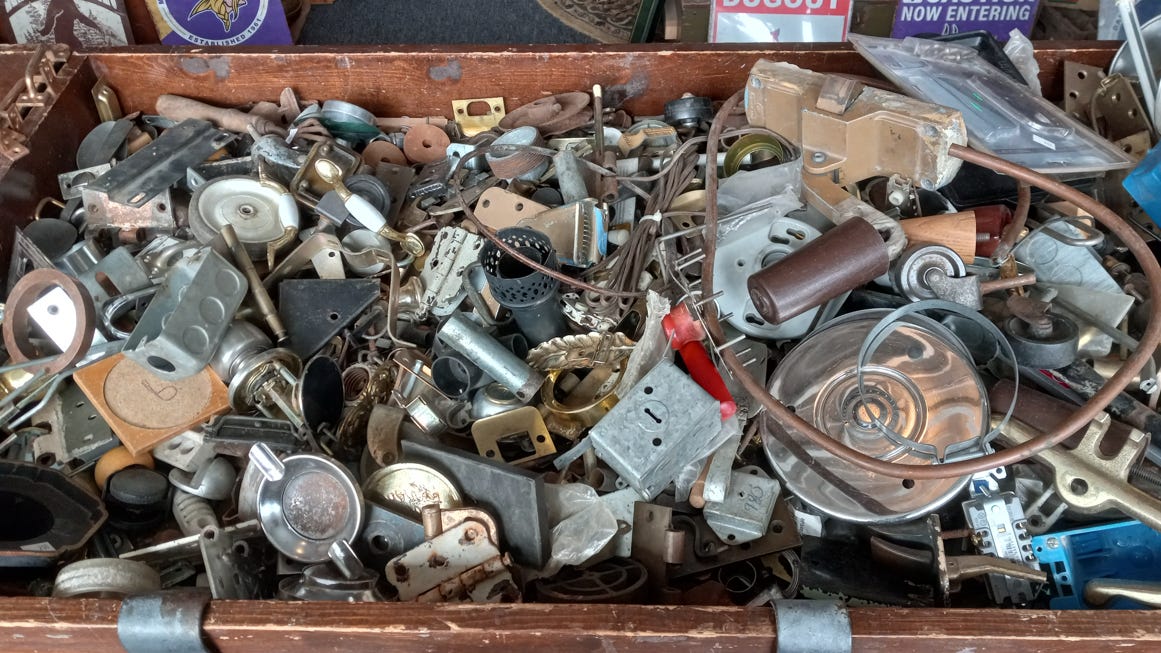
Junk and the man I sing; let us now praise famous junk. I celebrate the junk, and sing of junk; and what I assume you shall assume. Let us go then, you and I, while the evening is spread out against the sky. And where are we going? Why, to the junk stores, of course!
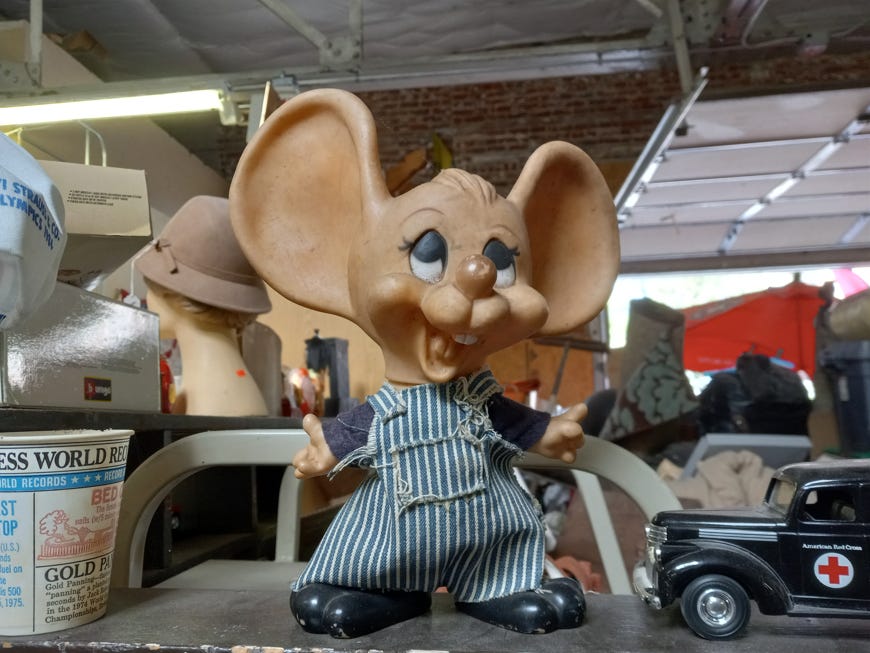
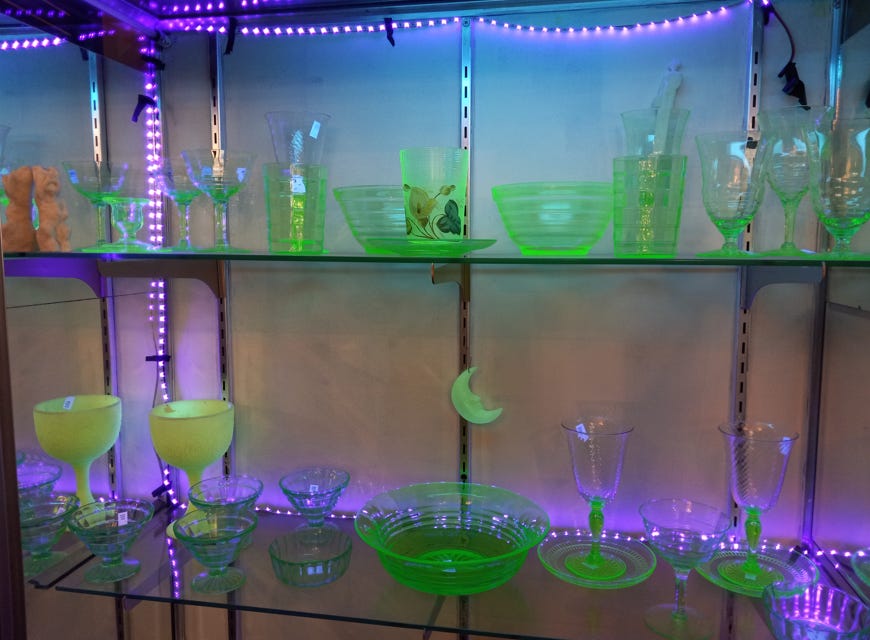
There are two vital points to remember when going to the junk stores. The first is that everything you see for sale, no matter how amazing or incredibly awesome you think it is, was once considered, by someone, somewhere, to be junk. As in, the things for sale are all either donations, castoffs, or the leftovers of someone’s estate after they died and their heirs picked over their accumulated horde and kept what they wanted. Nothing at the junk stores found its way there as an item of value. This is the opposite of the philosophy behind pawn shops; at a pawn shop everything you see for sale is assumed to have value. If it hadn’t, the pawn shop wouldn’t have taken it into their inventory. This is an extremely important distinction and it is reflected in the kinds of merchandise you’ll see for sale. At a pawn shop you can find electronic equipment—laptops, televisions, stereo components. You can find electric guitars and band instruments. They have power tools and guns. 1921 Morgan silver dollars. Gold jewelry. It might be strange and interesting but it’s not JUNK.1 Junk, properly defined, consists of the worthless trash or superfluous unwanted articles of the past two centuries. I have seen piles of broken boards and bricks at a junk store. I’ve seen more vinyl records than I can imagine; and not the good ones snapped up by the hipsters—no, I mean the junk ones, albums like the Jane Fonda workout record or Whipped Cream and Other Delights; every junk store in Omaha seems to have at least one of those two albums in its holdings somewhere. I’ve seen old shaving brushes, broken typewriters, that kind of glassware that glows under blacklight and is literally radioactive—in other words: junk.2
But the second thing to remember about junk stores is that everything in them was made by some person and had, at one time, actual value. This is a truth about every item in a junk store: someone once said of it, “Yes, the world will be a better place if this object is allowed to exist in it.” Or: “I bet if I make this I’ll be able to get some money,” which is essentially the same thing if you believe the capitalist line that a person’s self-interest is to serve the market, and the market’s interest is that of the world at large.
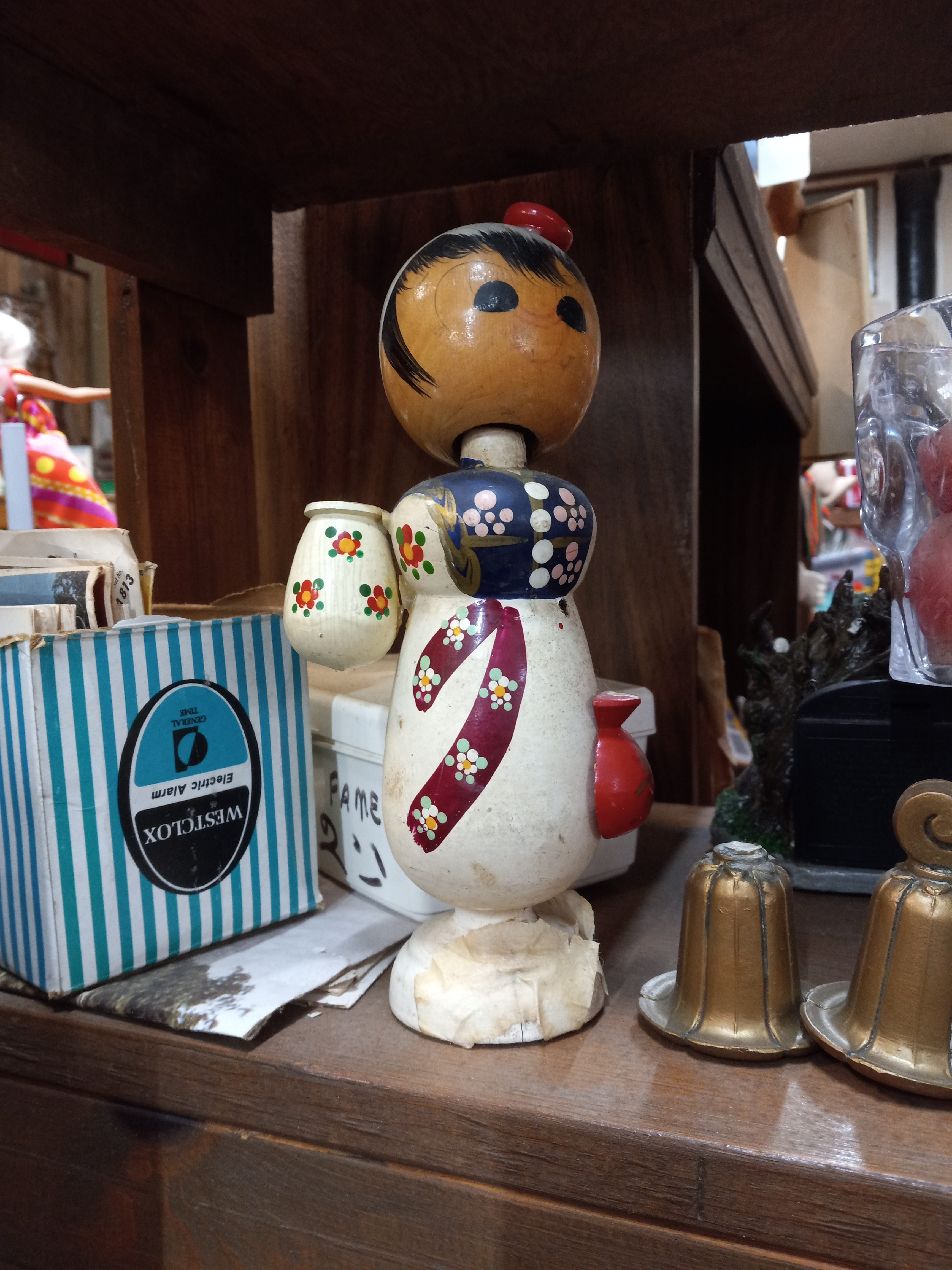
Ponder with me, then, this junk. We see before us an assortment of strange items. Obviously they were made for commercial purposes but those purposes are lost or differently directed now. Who would buy this stuff today? Old toys and games and “collectibles” give us glimpses of different worlds, ones in which these things were, to at least a subset of the buying public, beautiful or fun or cool—and worth paying money for. Whatever they are now, they were, at one time, loved unironically. Somebody, somewhere, gave some of their money for them. Someone chose between saving for the future, and buying this stuff.


But often the items found at junk stores were not, in fact, made for commercial purposes. Many of them are private works of art. At times these pieces of junk can be quite confusing. Who made them, and why? What purpose was in the mind of whomever painted a picture of cute pink numchucks and tasers and brass knuckles and a knife dripping with blood? What is the story behind the carrom board decorated with hearts and some sort of saying done in the live laugh love font? Who glued a bunch of horns together into a meta-horn, and why did they do it?


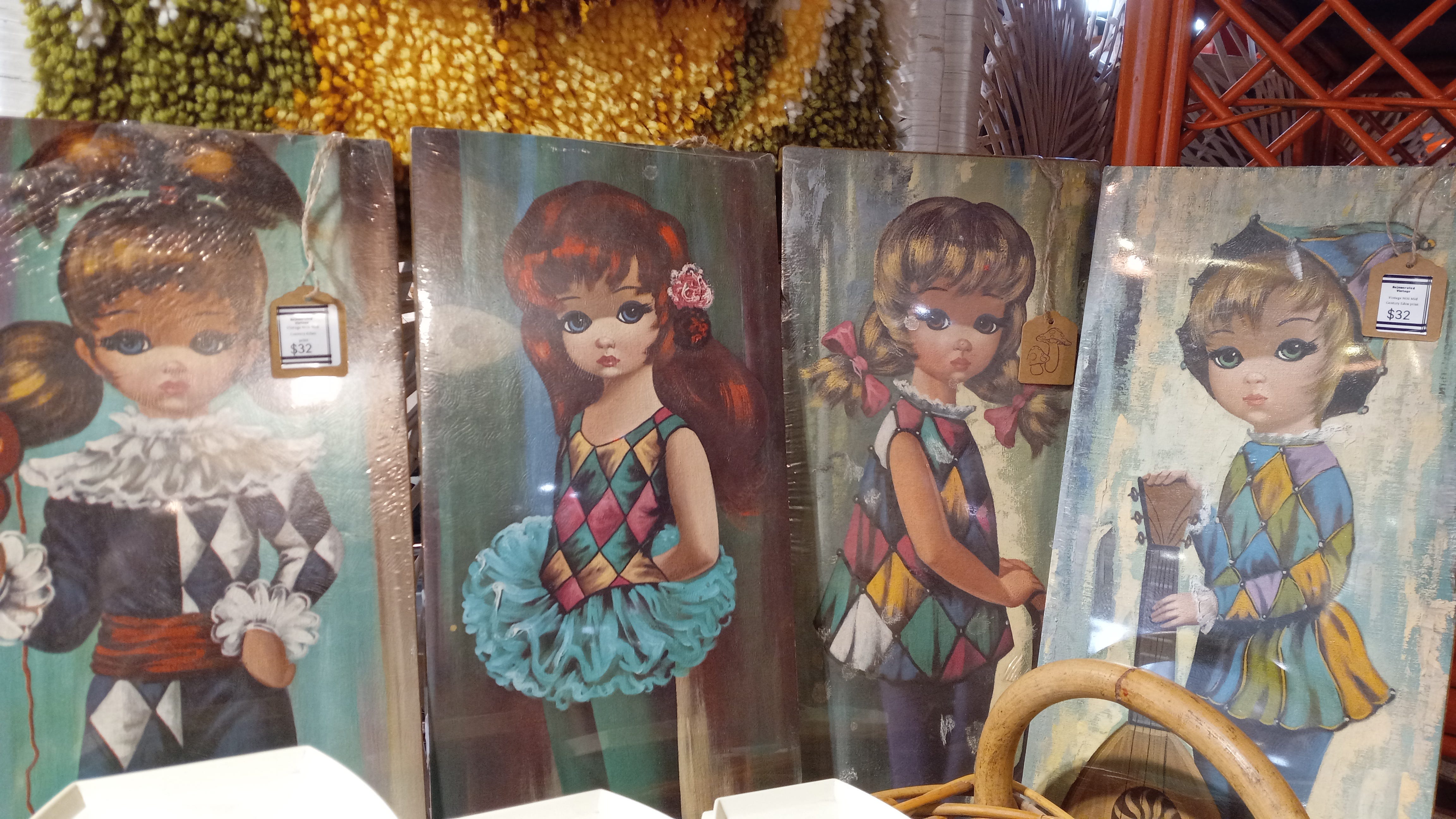
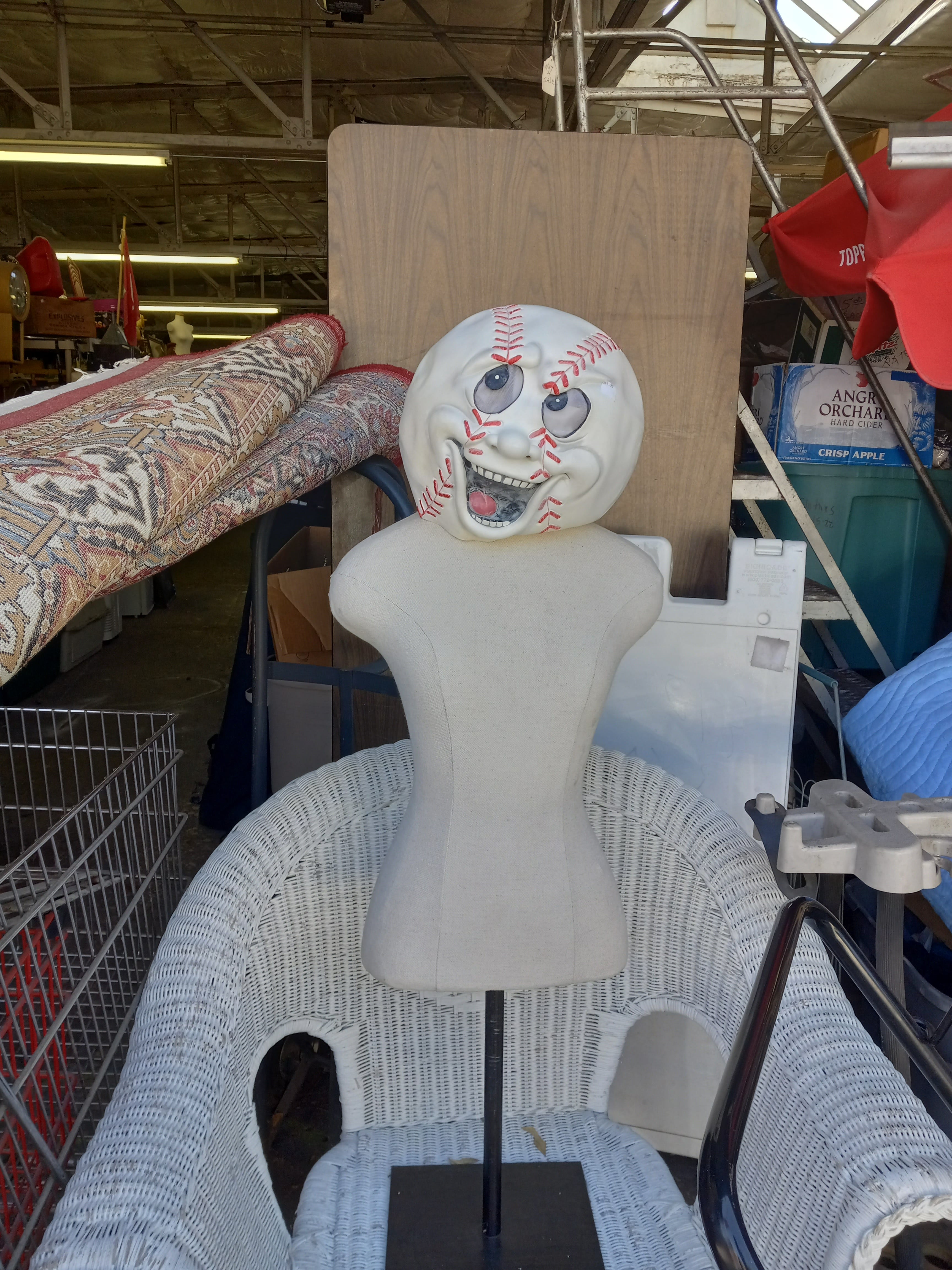
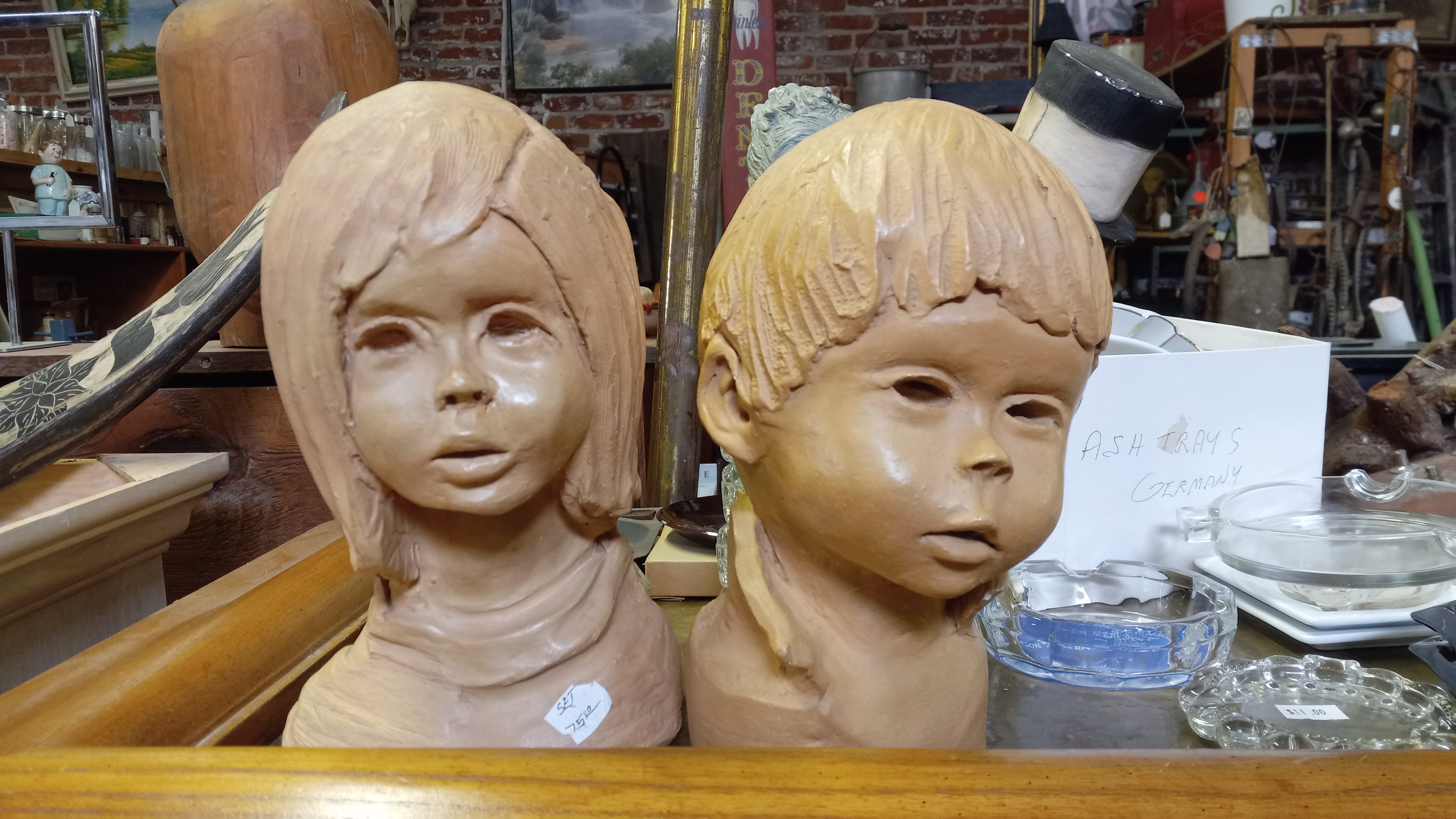
Of the two kinds—commercial items and private art—I’m not sure which one I find more fascinating. From an anthropological standpoint, both kinds are valuable inventories of visual culture and both convey deeply significant narratives about life in the modern world.3 And from an aesthetic standpoint, both provide some of the most uncanny imagery to ever inhabit the mind. Wilde said all bad art is sincere. What was the sincere meaning meant to be expressed through this odd quadriptych of sad little girls in circus costumes?
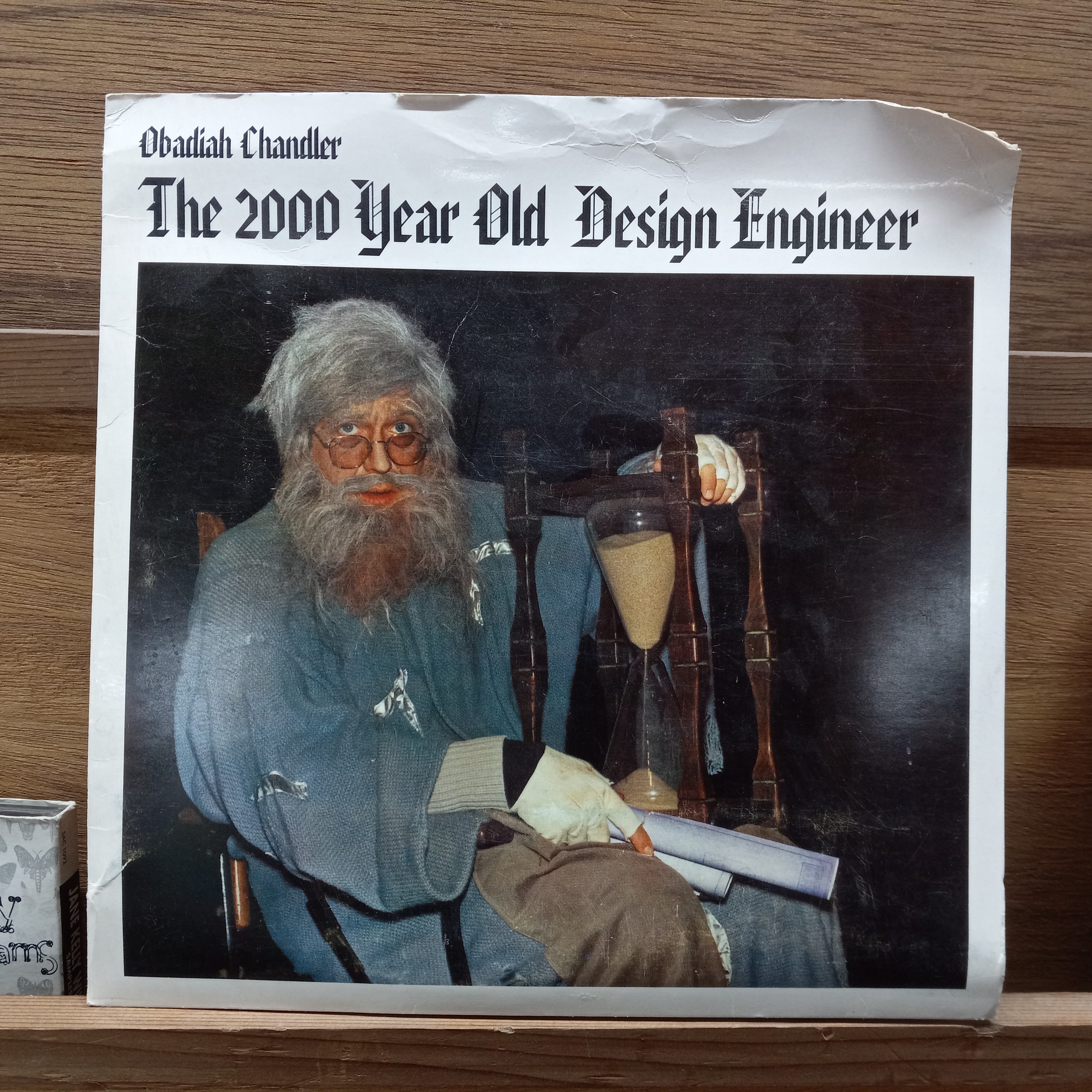
Have you ever had the experience of poking around at a junk store only to be confronted with an item which sparks in you a sudden rush of memory; perhaps you had one of these things as you were growing up and perhaps you’ve forgotten it only to be flooded with recollections (as Proust was when he ate that cookie). It happened to me recently when I visited a junk store and saw the exact same edition of Mastermind that my parents had when I was younger. As a child I spent an inordinate amount of time staring at the cover image of Mastermind. It was full of unaccountable mysteries to me. The glass tabletop; the stern man’s hands, fingertips touching; the beautiful girl next to him, of ambiguous ethnicity—who were they? what were they doing? Why were they so condescendingly aloof? Of course I didn’t buy the Mastermind from the junk store; that would have robbed future customers of the chance to experience what I had felt. Buying an item from a junk store is almost a form of sacrilege. It would be like looking at a painting in a museum and asking the docent “how much?” The true meaning and purpose of junk stores—their highest calling, the role they play the best—is to be repositories of weirdness, a weirdness that is best observed and then left as it is, not dispersed by the winds of consumerist nostalgia-induced acquisitiveness, as if buying that old game would have brought back my childhood somehow.
With all that in mind, let’s shift the focus of this essay to surrealism. As originally conceived, surrealism was an art movement dedicated to poking around in the subconscious or unconscious workings of the mind to find new realities. The movement favored strange and uncomfortable sexualized imagery, as can be seen in many of the works of Salvador Dalí, Hans Bellmer,4 and Max Ernst; even seemingly innocuous works like Alberto Giacometti’s Suspended Ball were interpreted as drenched in sexual significance. This was undoubtedly due to the influence of Freud, whose theories were never more accepted than they were in the twenties and thirties when old-school surrealism was at its peak; yet there were always aspects of the movement which didn’t partake of the sexualized interpretive paradigm and which existed simply to mine the weirdness that dwells below the conscious level. The surrealists interested themselves in creative techniques which introduced randomness into the process of making art—Ernst would squish his canvas onto a previously-painted glass surface, peel it off, and enjoy the results. André Breton invented a game called “Exquisite Corpse” in which people draw a figure together but can’t see the parts the others have drawn until the end. Again, as with much of what the surrealists did, the results of these experiments in randomization were often interpreted through a sexualized lens; but they didn’t need to be. Much of the finest surrealist art merely revels in the potentials of odd juxtaposition; think of the famous image of the locomotive in the jungle that Breton loved. This sort of thing leads inevitably to the exquisitely intricate sculptures of Joseph Cornell.
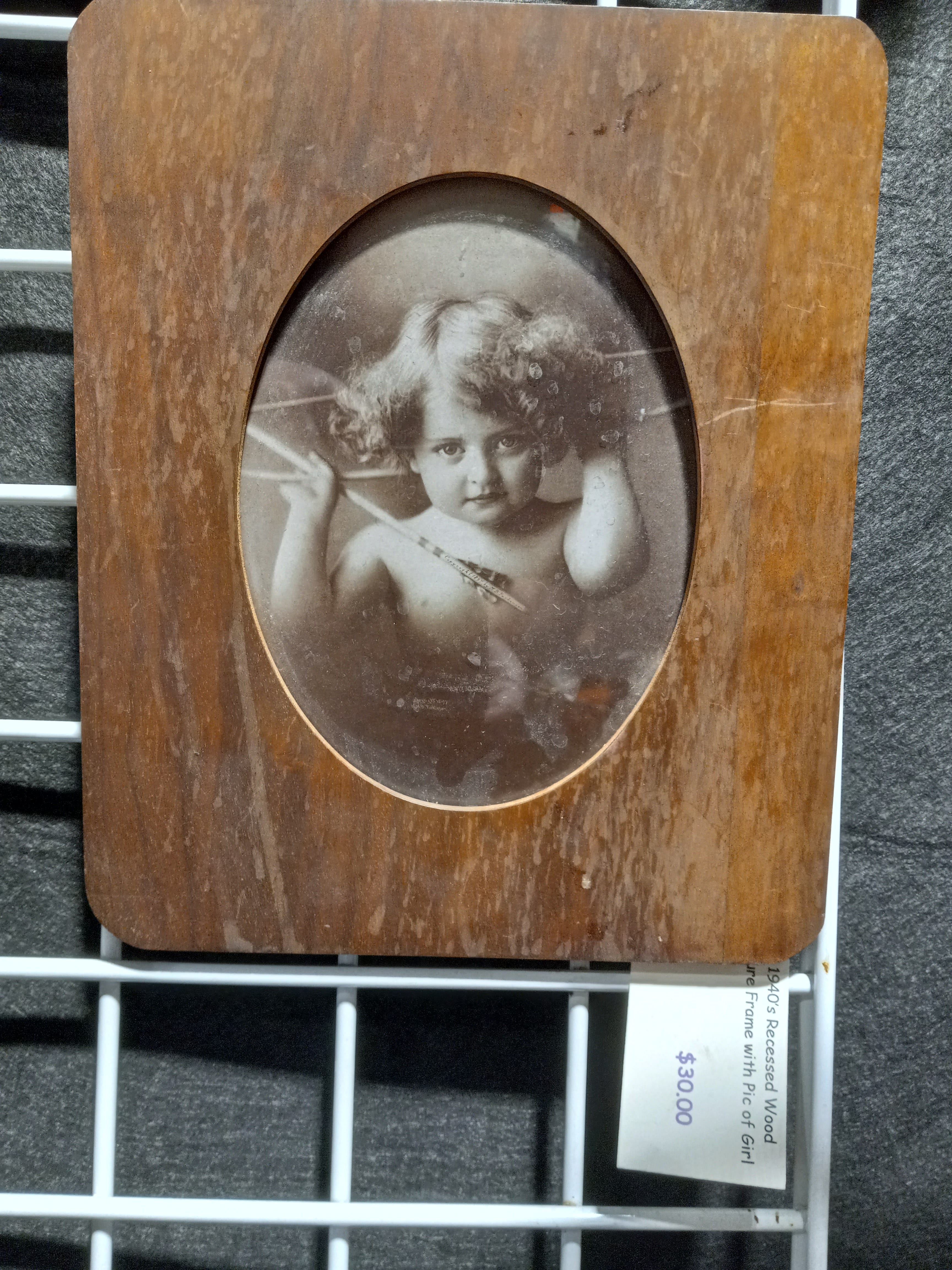
Cornell brings us back to the ostensible subject of this essay, for it was in the junk stores of greater New York that Cornell found the material for his artworks. He was able to see the artistic potential in cast-off junk at flea markets and estate sales in a way surprisingly similar to how vaporwave musicians see potential in corny elevator music and forgotten pop B-sides. Cornell also shares with vaporwave the same aestheticization of decontextualized nostalgia borne of curiosity and wonder. For Cornell and for vaporwave the world is made of junk—but what beautiful and interesting junk!
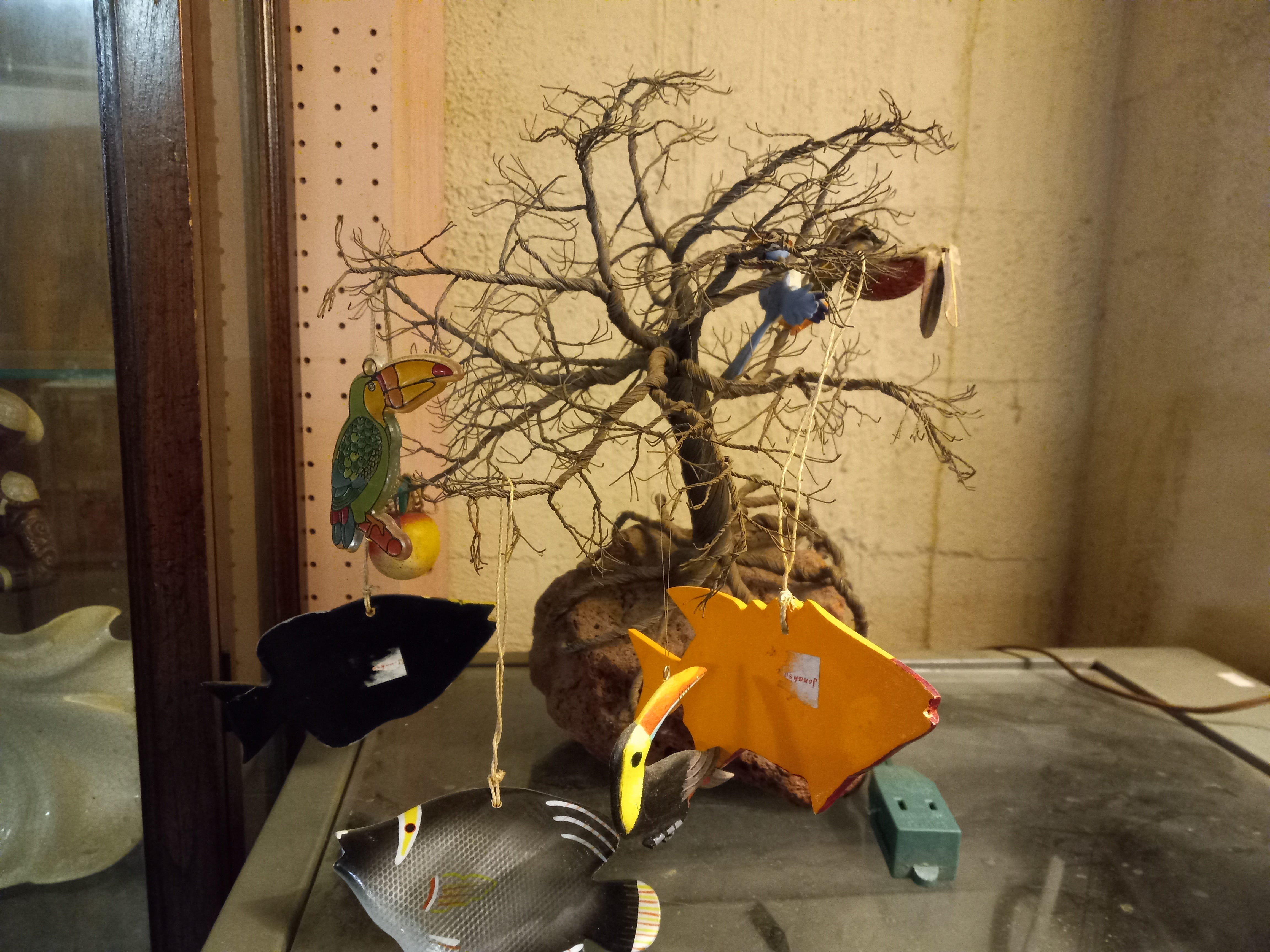
This is the true power of what lies in junk stores. The contents therein are able to spark that frisson of uncanny evocation that the best surrealist artworks inspire. Any artist willing to explore the depths of reference and allusion to be found in the commingling of unrelated objects is encouraged to hurry themselves to the junk stores and prepare for the inspiration which is sure to strike. There is no better place for an exploration of the latent surrealist potentials of juxtaposition, memory, and nostalgia than the junk stores of today, replete as they are with the leftovers of more than a century of unrestrained consumerist overproduction.
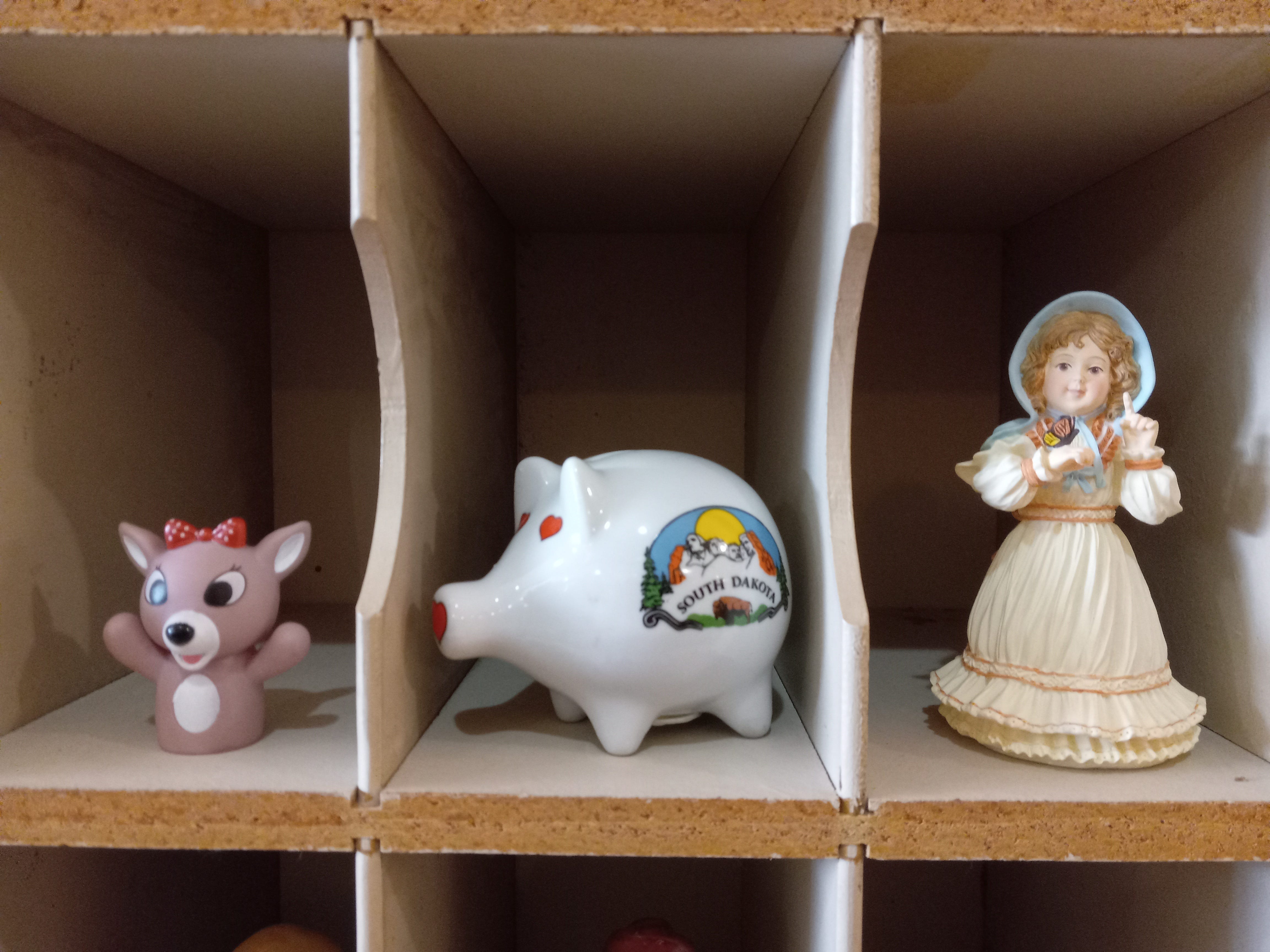
Here, in the junk store, can be found a record of the styles, trends, fancies, habits, cultural byways, forgotten fads, and other refuse of late capitalism. Junk store cruising is to the urbanite what beachcombing or a walk in the forest is to the nature lover; with the added layer that, as was said before, all the finds in a junk store have a meaning which may be incomprehensible but which most certainly exists. A shell or a driftwood from the beach? There is no meaning in them. But hello, what is this weird thing—who made it—and why?
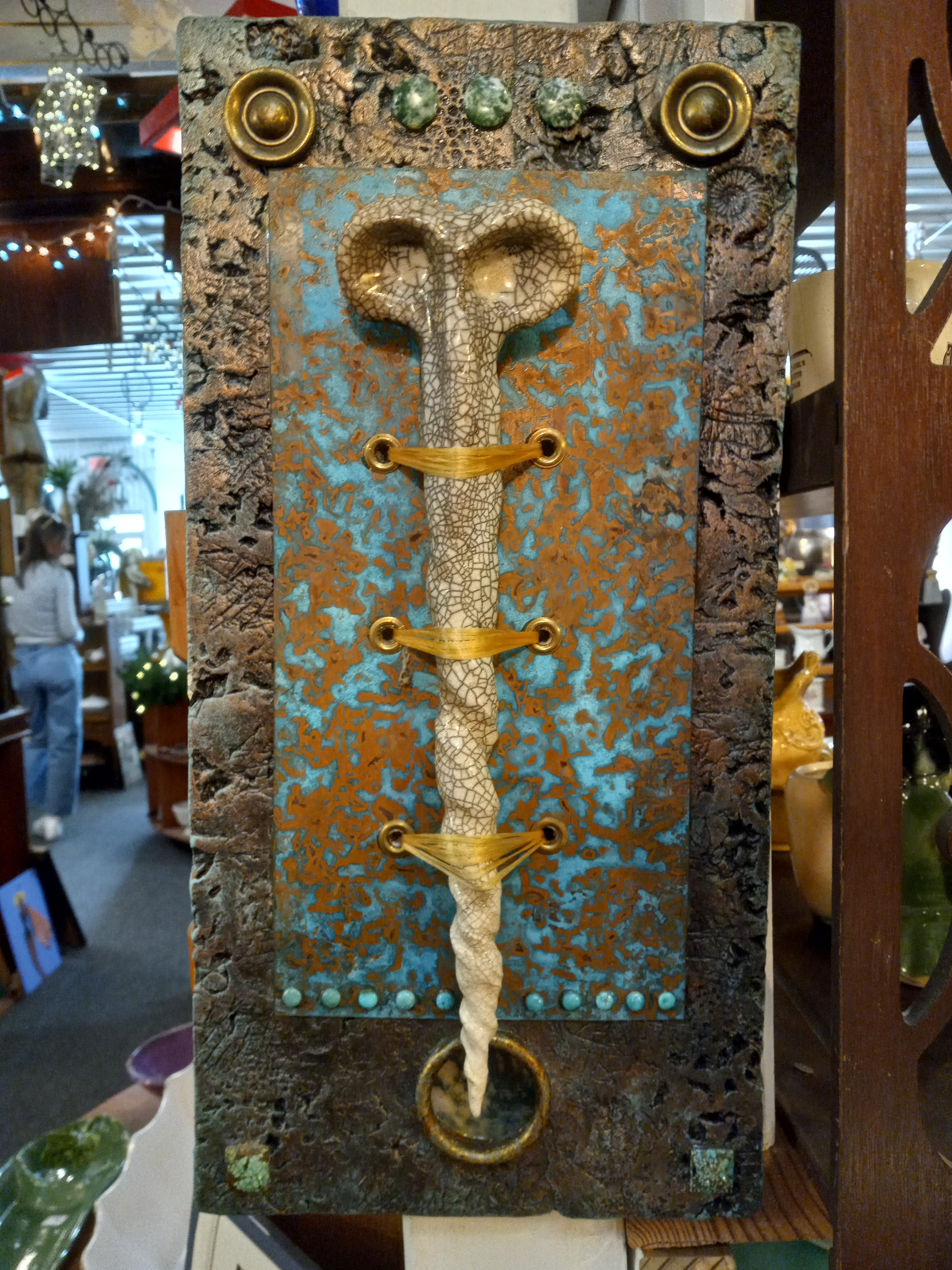
Junk stores—memorials of ruined memory. Junk stores—museums of weird juxtapositions. Junk stores—quasi-vaporwave conduits of warped nostalgia! All of these I sing!


Hail, then, and long may they remain!
Neither am I talking about thrift stores. Thrift stores are also full of castoff items, but they mostly stock clothes; and the thing about clothes is they always come back in style. The younger generations have discovered thrift stores and are heavily invested in “going thrifting”: my 18-year-old daughter does so, and she prepares by watching thrift store content on YouTube, Instagram, and TikTok. Another difference between thrift stores and junk stores: some of the thrift stores, most notably Goodwill, are actually stocking new items. This would never happen in a proper junk store.
Once this really happened: I was at an antique mall pondering the junk and thinking about items which were at one time ubiquitous but now are rare. As I pondered, it dawned on me that I had never actually seen, in person, a real barrel. I’d seen pictures of barrels aplenty; but never an actual hoops-and-staves barrel. As I strolled through the store I searched my memory but I could not remember ever in all my life seeing a barrel. And then I looked up, and directly in front of me, two feet away, was a barrel.
Someday I’m going to have to write about my family’s three-generations-long practice of collecting novelty salt and pepper shakers, all of which were manufactured and sold commercially at one time or another and most of which are indescribably weird.
Not a single throwaway line to be found! Superb piece, William.